

If there is one thing that I have found that illuminates so clearly the evidence of my own unenlightenment, it’s pain. A thief in the night, consuming my attention, enveloping my awareness; searing, cutting, burning nerve pain. Impossible to ignore, impossible to escape. Hours upon hours waiting for the darkness to become light.
For the past 5 weeks, I have been dealing with sciatic nerve pain. At its worst, floor ridden, unable to do anything but roll in circles and forget what it was like to have even a moment to focus on anything but pain. Rolling and rolling until sunrise. Sitting in the shower, a moment’s reprieve before the demon dread of standing crawls up my spine. Too much pain to stand and make food, so we sit on the kitchen floor and wait.
Wait for what? For things to get better? For the pain to leave? For this moment to march into the past, a procession of possible futures, alas. Hours and hours spent unable to break the spell. A presence for certain but not a presence of min(e)d. This presence was dread, the awareness, an anticipation of what it might be like to be here forever, suspended at the tipping point, the event horizon, the unknown future, and the wheel of Samsara keeps on spinning.
There were moments when I completely gave up, gave in. The twilight hours most frequently. Steeped in darkness, long after the moon had risen, the ephemorous twilight, an unknown time and unbearable place. Sadness, anger, grief, hatred. My screams muffled by the pillows, by the blankets. Reduced to my sensory body, consumed by my human frailty, my mind trying to cling to what was at once pleasant and avoiding pain. The textbook definition of suffering.
I am grateful now for those moments of despair, for the knowing gained in the presence of not-knowing. And ultimately, an unknowing of what I knew when I wasn't distracted by pain.
As I have tried to manage my symptoms and heal, I have realized that this injury is a gift. A gift to know what will be known to all of us at last, at one point in our lives, or another. When it all falls apart. In death or dying, in the inability to do something that we once loved, when we can no longer walk or see or love or even think. This pain, this injury, was an alarm bell for the war that is coming to everyone.
A war that is impossible to win.
Throughout this process of pain, I have tried to rediscover my spiritual practice. I say spiritual because it affects all aspects of life, and practice because each of us comes at it in our own way. Meditation (the catch-all word) has been with me for years now, sometimes stringent and daily, other times it falls away, unnecessary. Not in the sense that it’s unhelpful, but in the sense that there is no race that I am trying to win, or can win in the end.
This has brought me to my central point.
When we are reduced to our little selves, our I’s in our heads, the me in the mine, suffering is inevitable. There are many ways out (or should I say in?), but all require the dissolution of what is usually meant by “I”, “you”, or “me”. I have been fortunate in my life to spend time with certain practices (Vipassana, Zen, mindfulness, psychedelics) and gained an illumination towards the way things actually are, or at least a glimpse. But as times like this overwhelm I am certain that my work is never done.
In times of great pain or hardship, I am brought back into practice to be more mindful, more present, more gracious. Could I be like this all the time? Maybe. Should I be? Maybe. But alas, when the alarm bell rings some-One has to answer.
The ideas that have moved me most recently are…
The Core Practice of Dzogchen:
Leave it as it is.
Whatever arises in your mind, do not try to change it, don’t push it away, and don’t hook onto it.
Look for the gap.
In the moment between whatever arises in the mind, there is a clear, cognizant stillness.
The instruction:
“Do not invite the future, do not pursue the past, and do not be swept away by the present.”
The Subjective Experience of Having No Head (Pointing Out Instruction)
See as you actually see, not how people tell you you see. You do not look out of your two eyes subjectively; there is only one boundless window.
This window is not what you look out of, but where the world appears. This is an introduction to 2-way looking.
The Instruction:
Sit comfortably and hold your pointing hand up in front of your face.
Point out towards the space in front of you, then turn your pointing finger back to the space where your head should be.
Observe: You’ll find no eyes, nose, or features; just the world appearing in an open, transparent expanse.
This isn’t an idea, it’s a non-verbal direct insight into the experience of being the boundless awareness or no-thing that you already are.
Dzogchen is a form of Tibetan Buddhism emphasizing nondual awareness.
“On Having No Head” by D.E. Harding. A Western look into nondual awareness.
Other Resources:
The Waking Up App and anything from James Low.
Dhamma.org an organization providing donation-based silent retreats.
What has helped you on the path to living well?
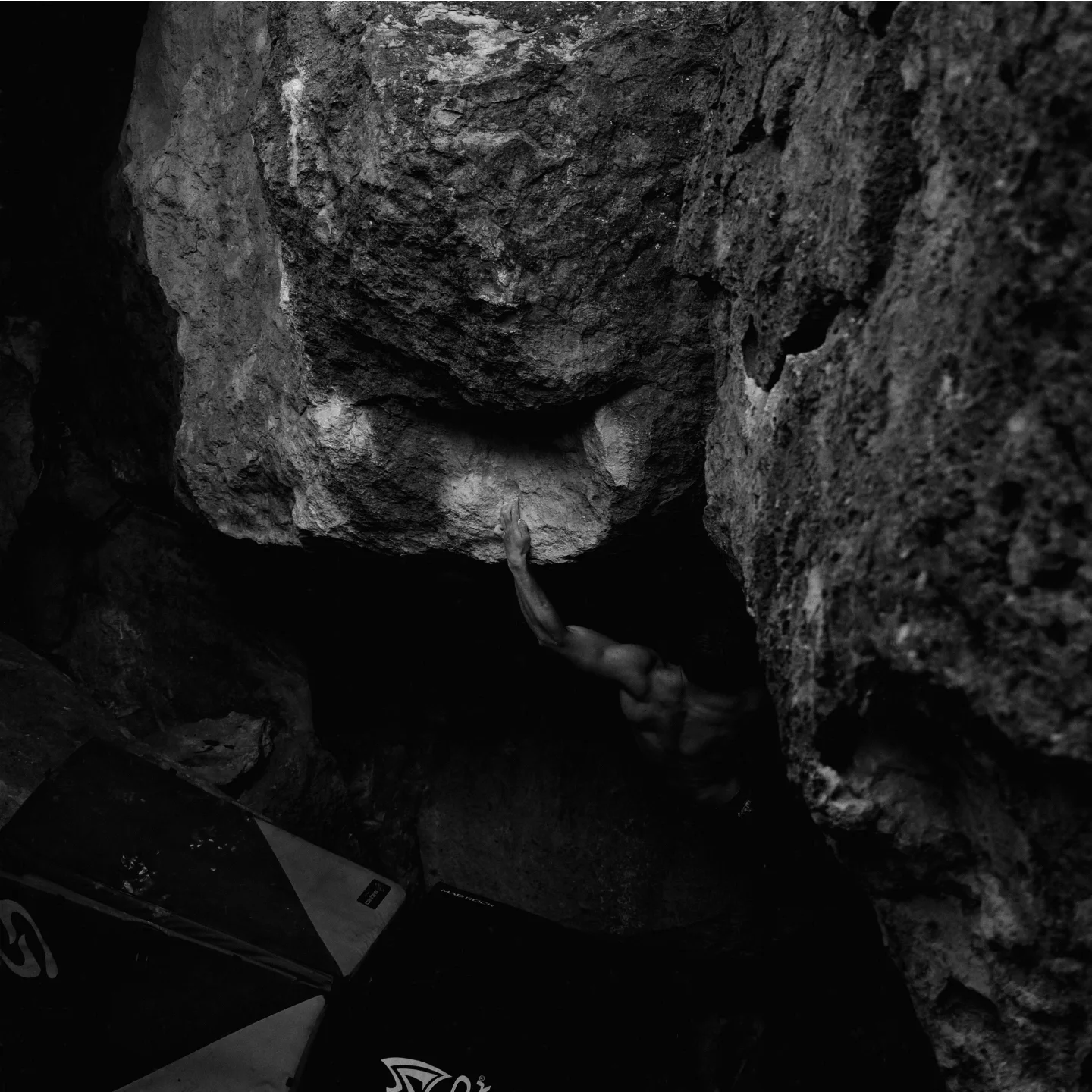
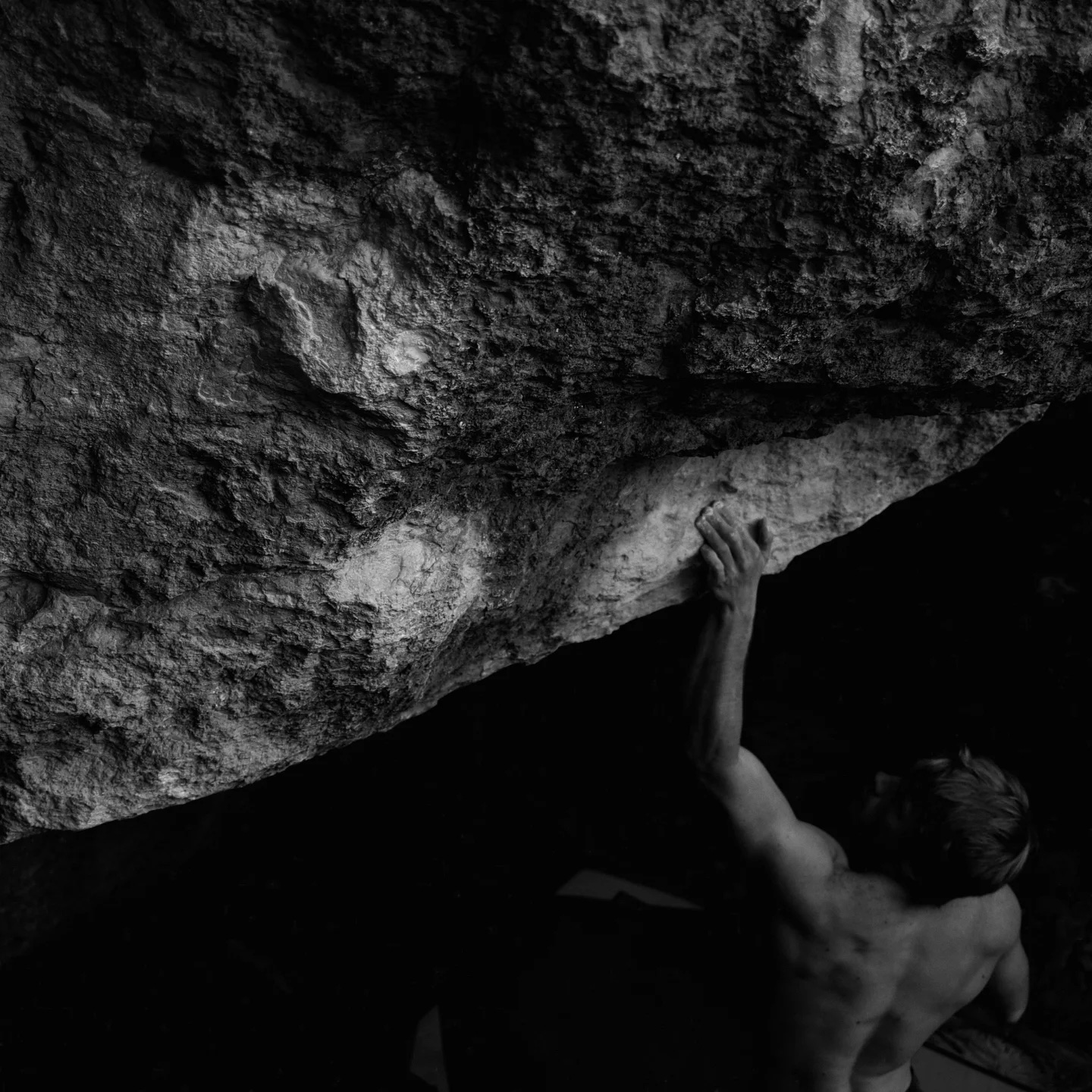
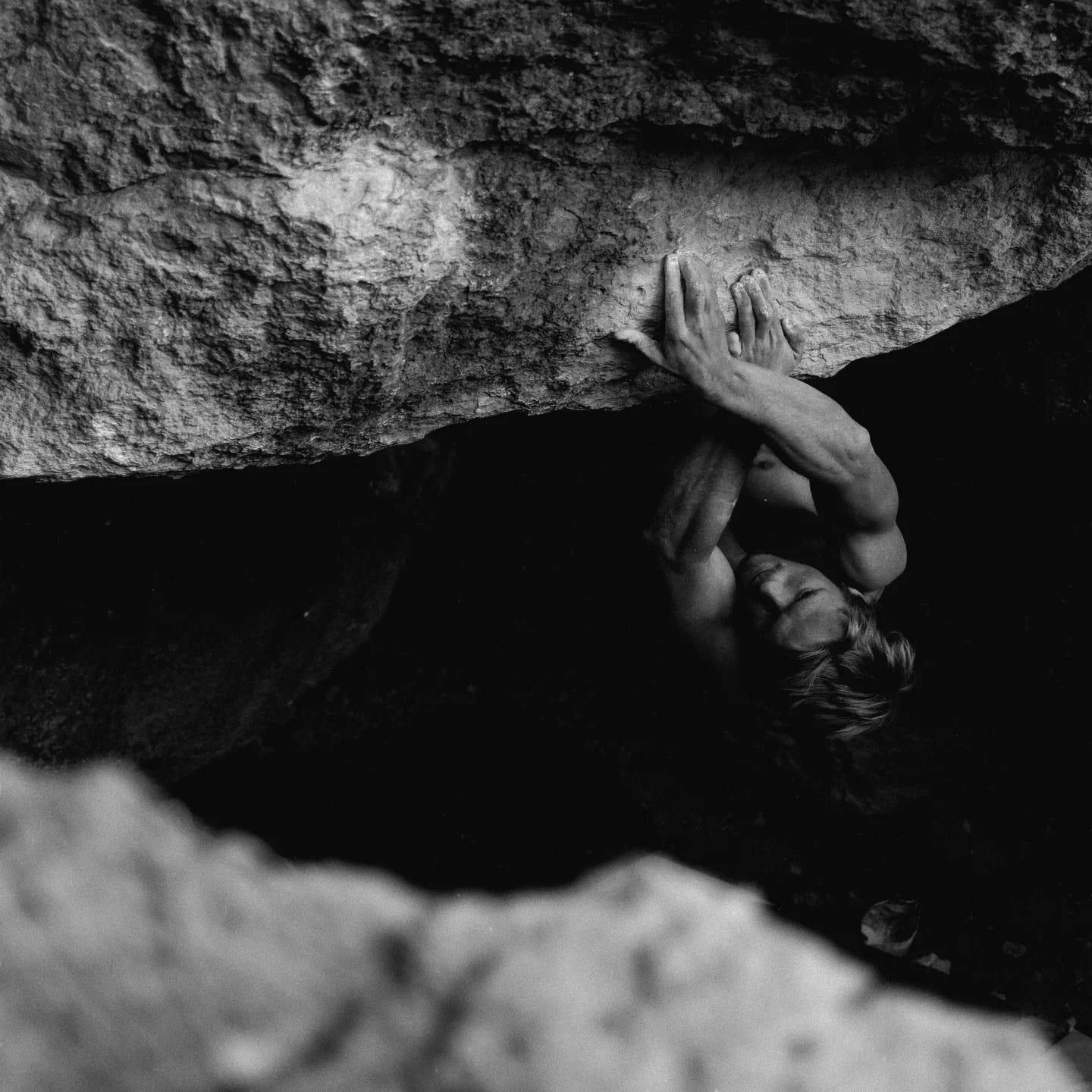
Images: It’s been a silver lining during this time to express myself artistically. These photos of Braxton were captured on my FujiX100V during a day out at the Sad Boulders in Bishop, California.
So impressed with your ability to find meaning and a silver lining in the face of such a shitty hand of cards. Miss you, looking forward to the good days to come, friend